Sound
sculpted
by hand.
A small, devoted team in Piracaia, São Paulo — building each instrument one at a time, with patience and full attention, from the first hammer strike to the final note.
Four Paths.
Endless possibilities.
Rather than dividing by model, we organise our scales by emotional and musical character. Every Atma Pantam — whether a classic build or a progressive mutant — can carry any of these scales. Browse by the feeling you're searching for, then bring us into the conversation.
The emotional core of the handpan tradition. Minor scales draw inward — meditative, grounded, and rich with harmonic shadow. From the beloved Kurd to the haunting Pygmy and deep Celtic Minor.
Open, bright, and welcoming. Major scales carry the handpan into sunlit territory — ideal for players who want warmth, lift, and a sound that speaks naturally to any listener.
Scales that don't fit neatly anywhere — drawn from maqams, ragas, Balinese tunings, and modal territories without a Western name. For players who want to venture further out.
Your dream instrument, built around your musical vision. Tell us the notes you need, the feeling you're searching for, or the tradition you draw from — we'll design it from scratch.
Pioneered in the Americas
by Satya. Bright, resilient,
long sustain.
Rich, warm overtones.
Traditional character.
Classic feel.
Unique warm coloration,
distinct surface texture,
organic voice with big dynamic range.
What's Included
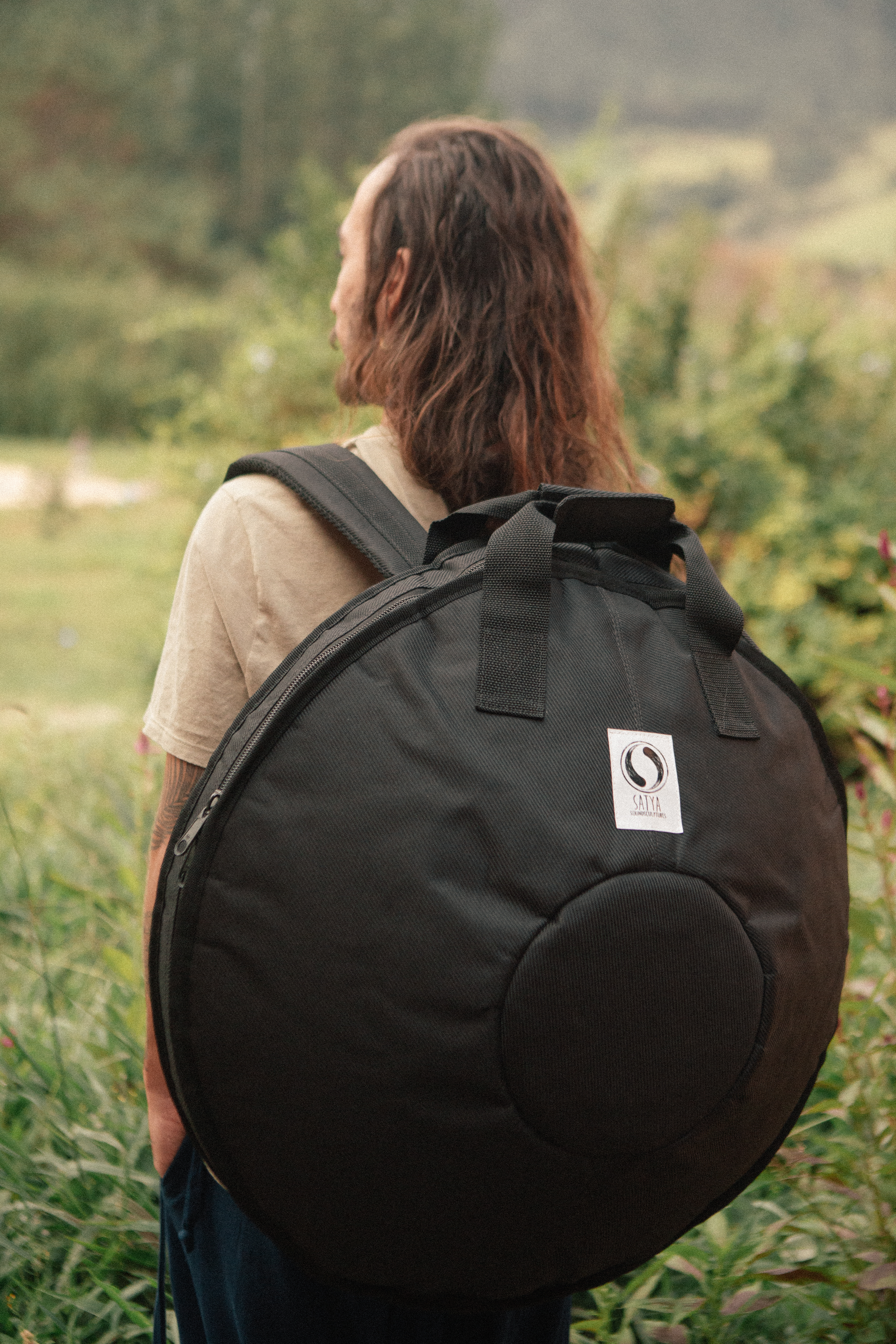
- ◈Premium Protective Bag
Custom-fitted bag to securely carry your Atma Pantam anywhere in the world. - ◈Double-Layered Fiberglass Helmets
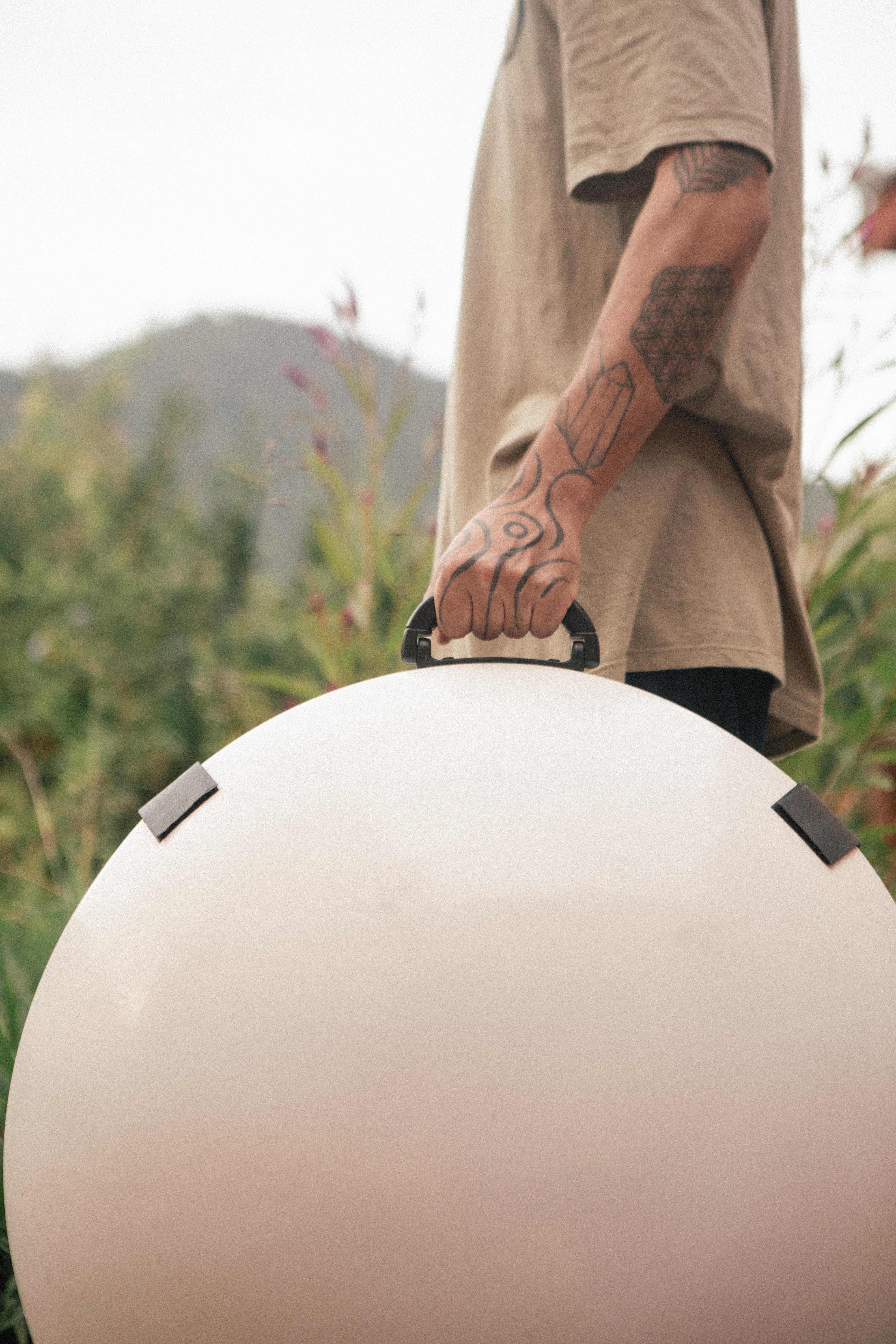
The same shipping system used in our Conscious Transit — immensely strong, reusable protection for the dome that comes included with your instrument, ensuring both arrival safety and long-term storage protection. - ◈Certificate of Authenticity
A signed official document by the maker, validating the originality of your instrument. An Atma Pantam cannot be imitated — this certificate is the mark that confirms it. - ◈Satya Care Pack
Everything needed to keep your instrument pristine, including our specialized handpan oil and a microfiber cloth. - ◈Care Instructions
Easy-to-follow guidelines for maintaining your sculpture's resonance and aesthetic finish over a lifetime.
Specifications
How we think
about making.
We build with a very small team. Each instrument receives the full attention it deserves — no assembly lines, no shortcuts. A handpan made with divided attention is not an Atma Pantam.
We believe the handpan has not yet reached its perfect acoustic potential. This drives us to create models never attempted before — in form, scale, and material. We also continuously design and refine our own tools: custom jigs, tuning rigs, and workshop methods developed in-house, always seeking greater precision without ever letting go of the human touch.
An Atma Pantam — "soul" in Sanskrit — is not tuned until it sings to us. The final voice of each instrument is as much felt as it is measured.
We were the first company in the Americas to build handpans in stainless steel. We choose materials for their acoustic and longevity qualities — always in service of the sound.
Every scale, every material, every configuration can be shaped to your vision. Our workshop is a dialogue — tell us what your dream instrument feels like, and we will find a way.
We build instruments to be used for their original purpose: healing, elevation, and connection to something larger. This intention lives in every piece we make.
Born from
devotion to sound.
Most cultures share creation myths that begin with a sound event. In ancient Vedic texts, the cosmic silence is broken by the vibration we know as Aum. Everything is energy, everything vibrates — and what vibrates, sings.
The word Satya derives from Sanskrit, meaning 'benevolent truth.' We believe that through the art of sound sculpture, we can express our truth here on earth and fulfill our purpose in this existence: bringing instruments of healing, elevation, and profound resonance into the world.
The name Atma also originates from Sanskrit, translating to 'Soul' or 'Higher Self' — described in ancient philosophy as the very core of human consciousness. We chose this name for our instruments because through Satya (Truth), we reach the Soul, imprinting passion and life into the steel.
"Built with love, devotion, passion — but most of all, with soul."

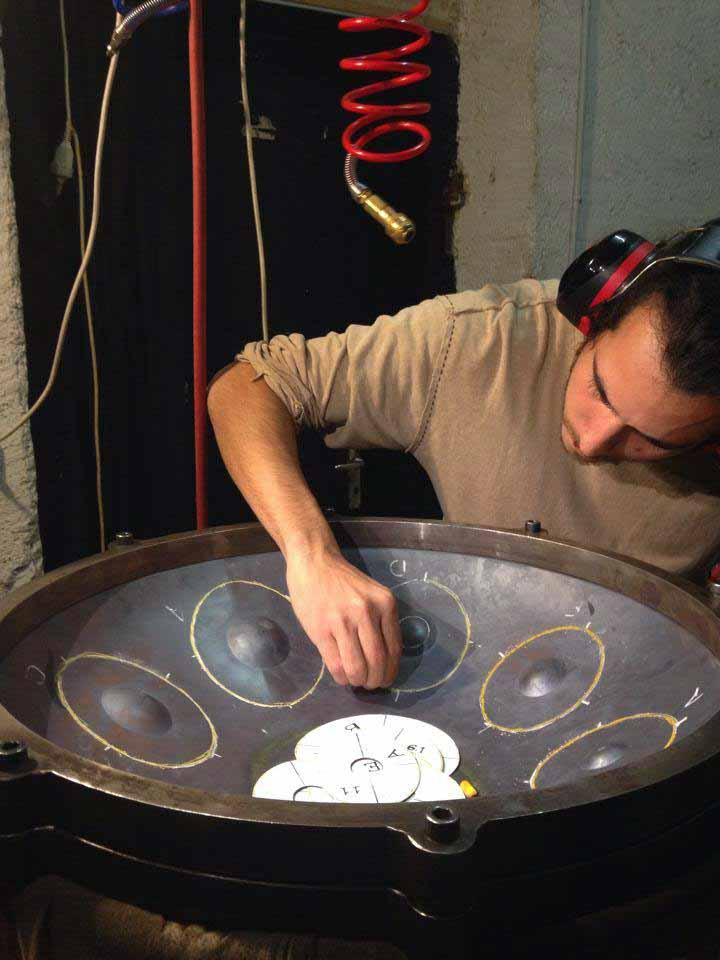
Antonio's journey began with a deep research in December 2011, sparked by a profound connection to his very first experience with the Hang back In June of the same year. After months of incessant research, he acquired his first instrument in November 2012. In a curious bond of fate, this instrument was the first official prototype built by Ezahn Bueraheng, founder of Echo Sound Sculpture (ESS), the legendary "Double RU" model. The ESS is a Swiss workshop founded in 2009 that pioneered modern pantam construction by establishing critical acoustic and structural standards following the discontinuation of the original PANArt Hang.
In 2013, Antonio's hammer first met metal under an earlier project. But the true turning point came in 2014, when he traveled to Switzerland and was officially initiated into the craft by Ezahn.
Through Ezahn, Antonio was initiated into a lineage descending from Victor Levinson (founder of the Pantam-SPB/Russia), creator of the "Pantam" concept—a different approach blending a ceramic sound, specific shell curvature, tuned shoulder tones, and a punchy ding. Levinson also established the 53 cm diameter as the standard, not as intention, but as consequence of his creations. Ezahn refined that concept in his way, and shared his vision with Antonio and others, that was the true spirit of the tuned steel community, knowledge sharing. By feeling so grateful, Antonio decided to honor his mentor's generosity, and has since shared this knowledge, inspiring a new generation of makers in Brazil and around the world.
After finishing his first prototypes in June 2015, Antonio returned to Switzerland in 2016 for a residency at the ESS workshop. Under Ezahn's guidance, he concluded his previous project and formally founded Satya Sound Sculptures. Before leaving for Switzerland, he had already crafted 32 instruments. The 33rd creation marked a historical milestone: the first instrument made of stainless steel in the Americas, entirely by hand and from a 1.2 mm sheet—without presses or pneumatic tools—Antonio became the fourth manufacturer in the world to explore this material at that time, the first in that respective order being: Space Drum (2009), SunPan (2012), Leaf Sound Sculptures (2015).
When Antonio returned from Switzerland in 2016, the true heart of Satya was forged with the official arrival of his brother, Pedro. This marked a profound turning point — the genesis of the Satya Brothers' legacy. More than a business expansion, it is a story of relentless resilience, shared devotion, and an unbreakable blood bond.
Pedro's entry shifted the paradigm of the workshop, transforming a solitary pursuit into a unified force. Together, they pushed past every perceived limit, multiplying their strength to elevate the Atma Pantam to heights neither could have reached alone.
Today, rooted in Piracaia, São Paulo, we remain a small team. We build slowly and deliberately. Each instrument is unique, meticulously handmade, and impossible to rush. This is not a limitation; it is our identity. The soul of an instrument cannot be manufactured at scale.
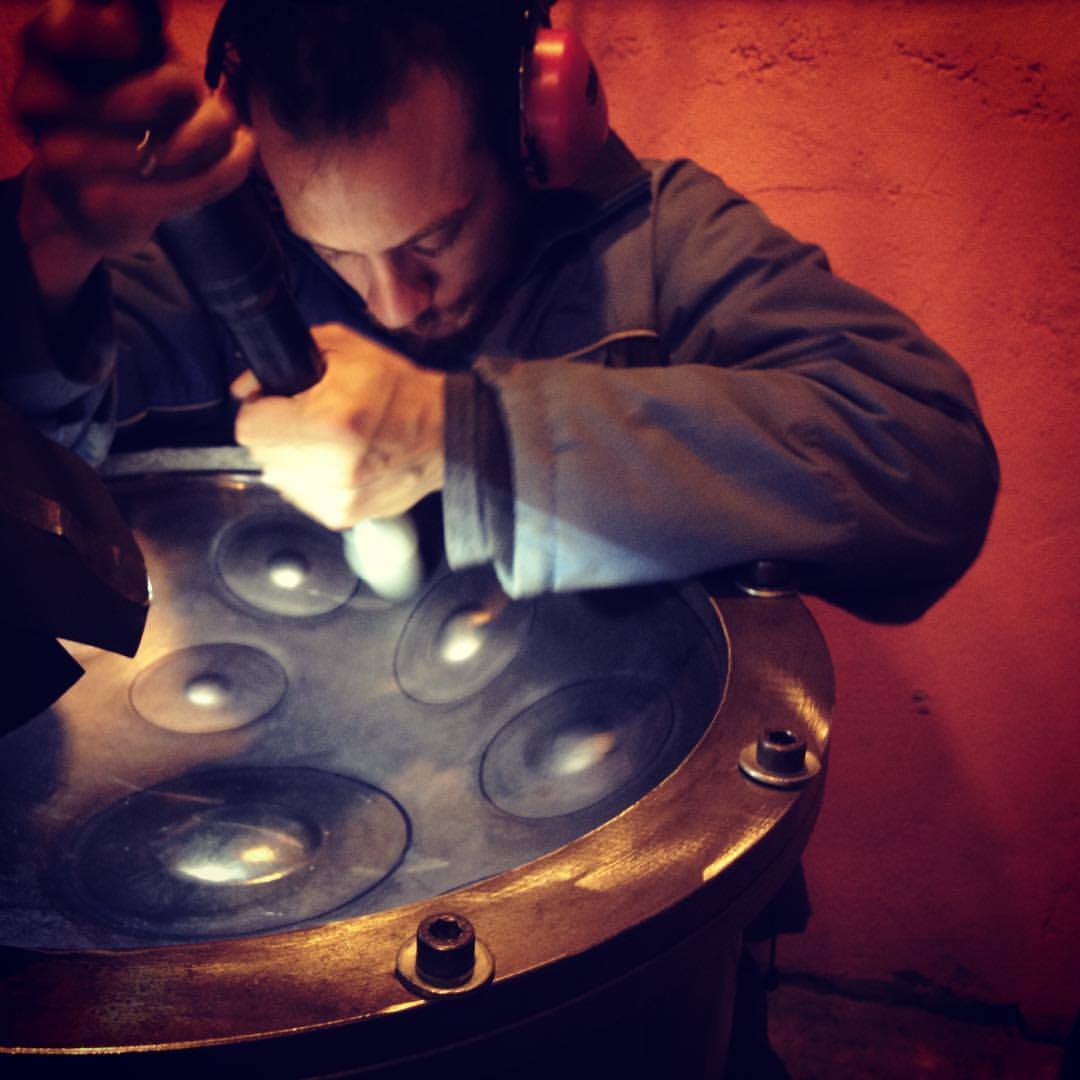

Piracaia, São Paulo · Brazil
Forged in Switzerland in 2016, rooted today in the Serra da Mantiqueira. Our environment shapes our instruments — the patience of nature, the depth of Brazilian rhythm.
begins
handpan in Americas
Switzerland
28 notes
32 notes
in the world
OF GONGPAN
Slow is
the only way.
Every Atma Pantam passes through the same hands, the same ears, the same hours of patient attention. There is no step that can be bypassed. This is what makes each instrument irreplaceable.
Each shell is chosen for its resonant character before shaping begins. Material integrity is the foundation of everything that follows.
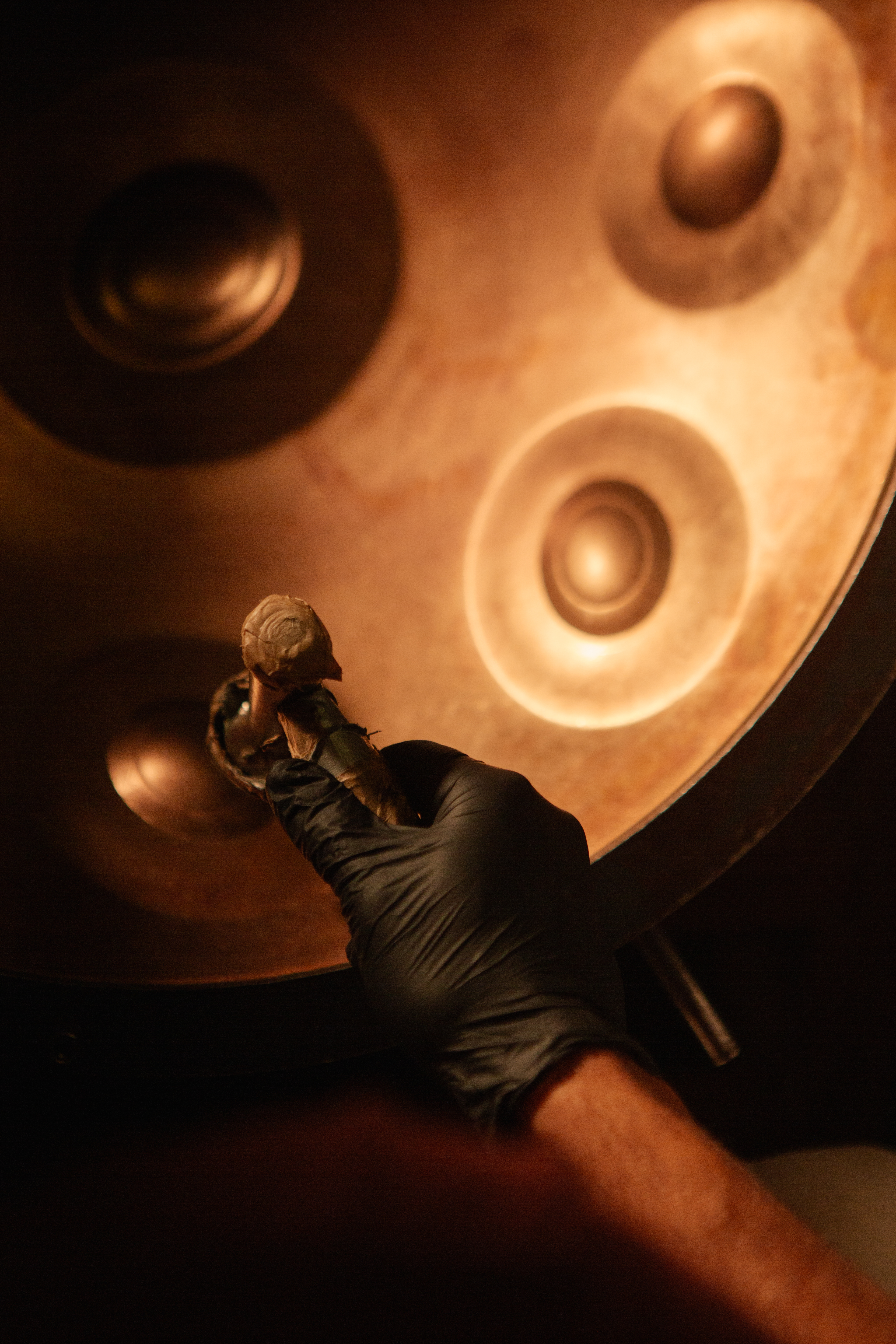
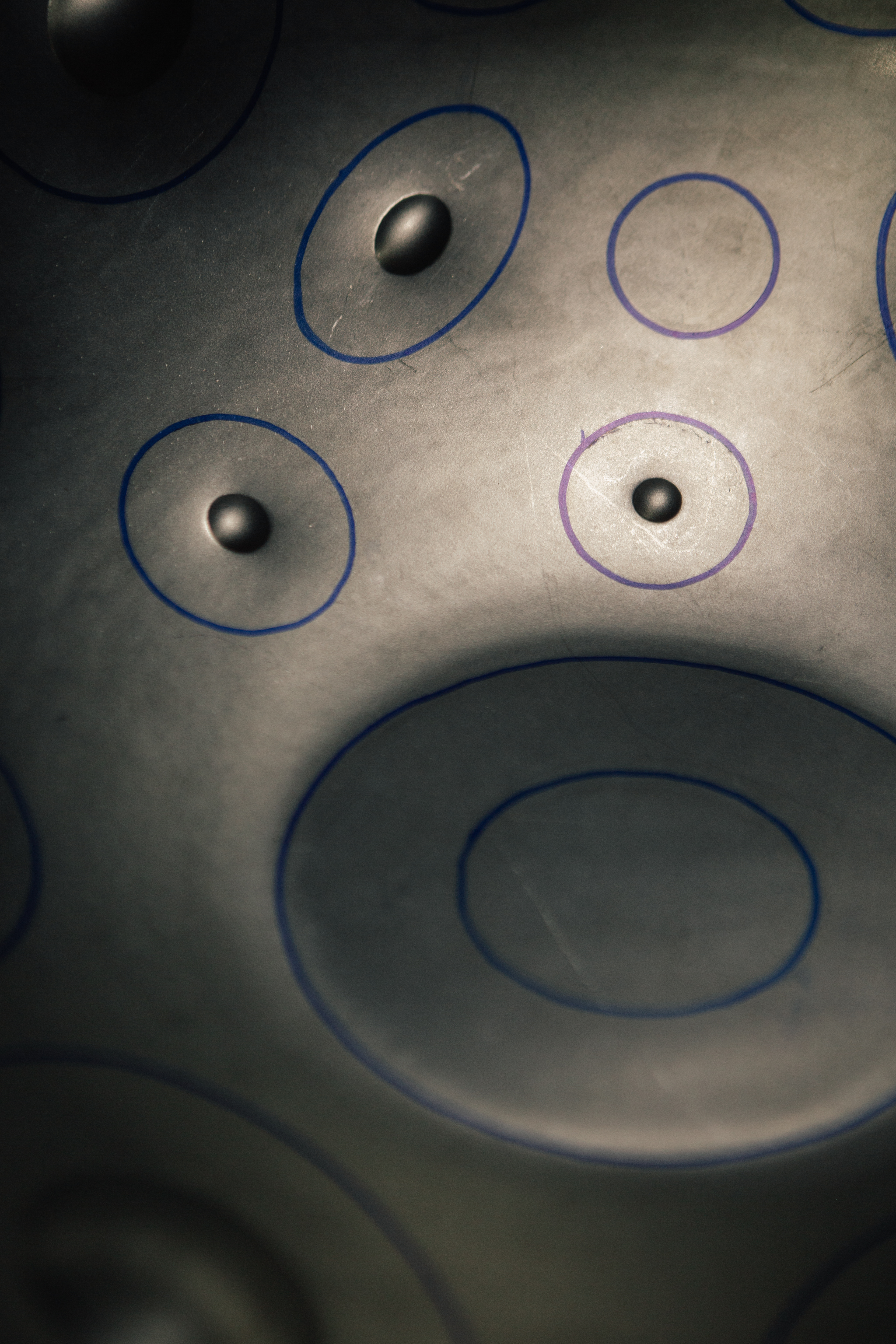
Hundreds of careful hammer strikes form the dome and define each tone field. No two instruments are shaped identically.
The shells are joined and treated to stabilise the metal's internal structure — unlocking the harmonic potential of the instrument.
We tune each note to its fundamental, octave, and compound fifth — not until the strobe is still, but until the instrument speaks. This takes days.
We play the instrument. We listen for what it wants to say. Only when every note sings in relationship with every other do we call it finished.
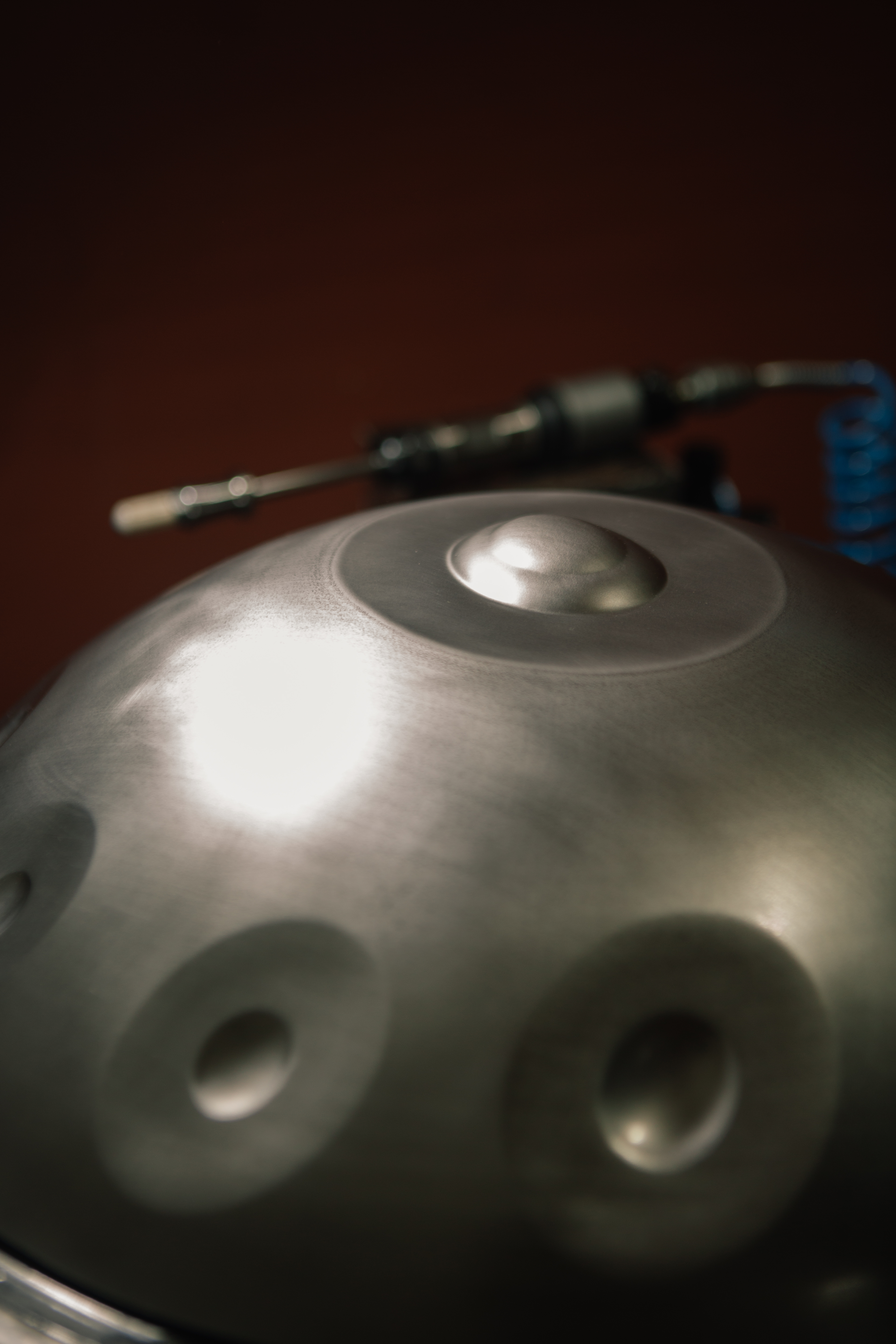
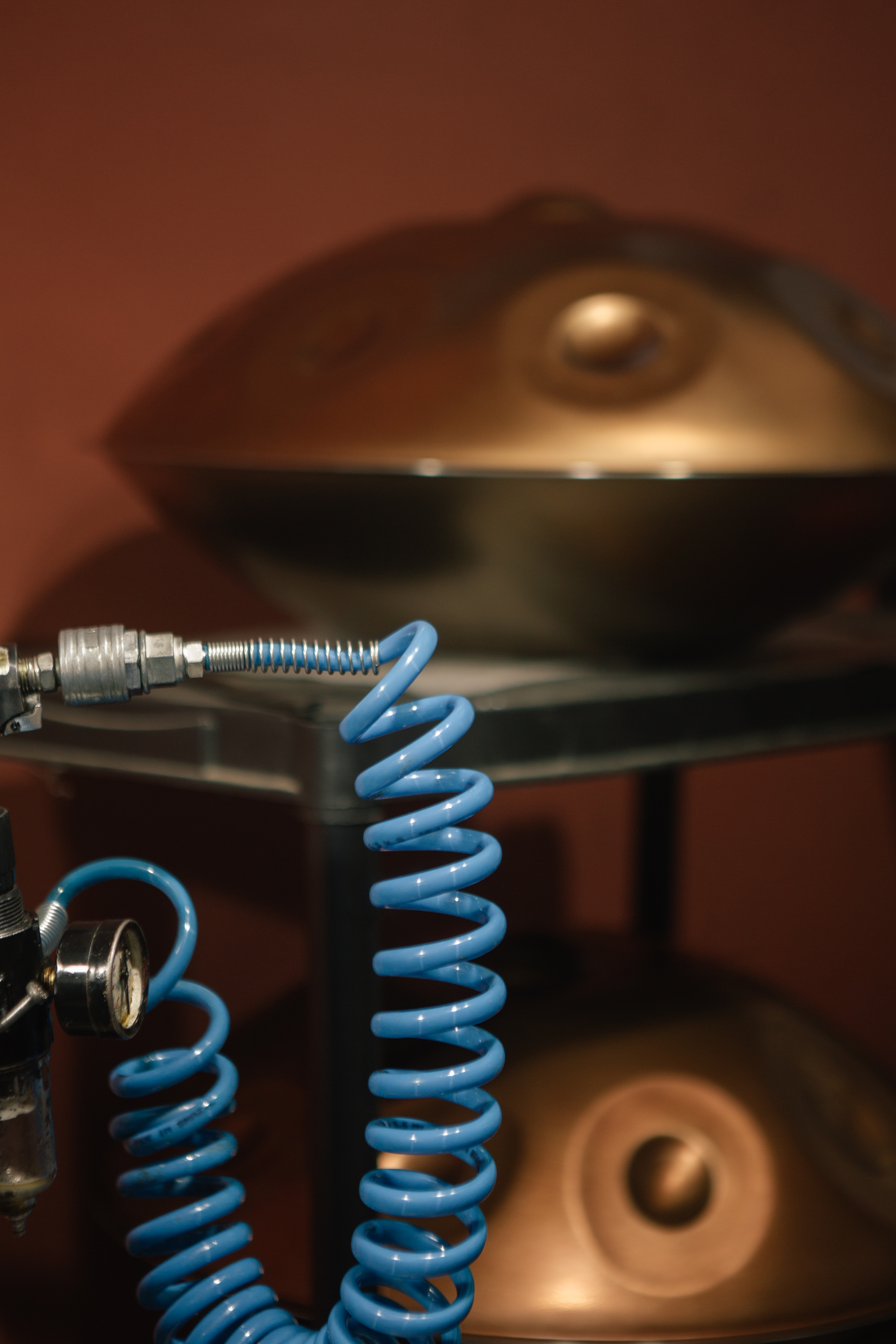
"The soul of an instrument cannot be manufactured at scale."
The Art in Detail.
A closer look at the textures, reflections, and unique characteristics of each Atma Pantam we forge.
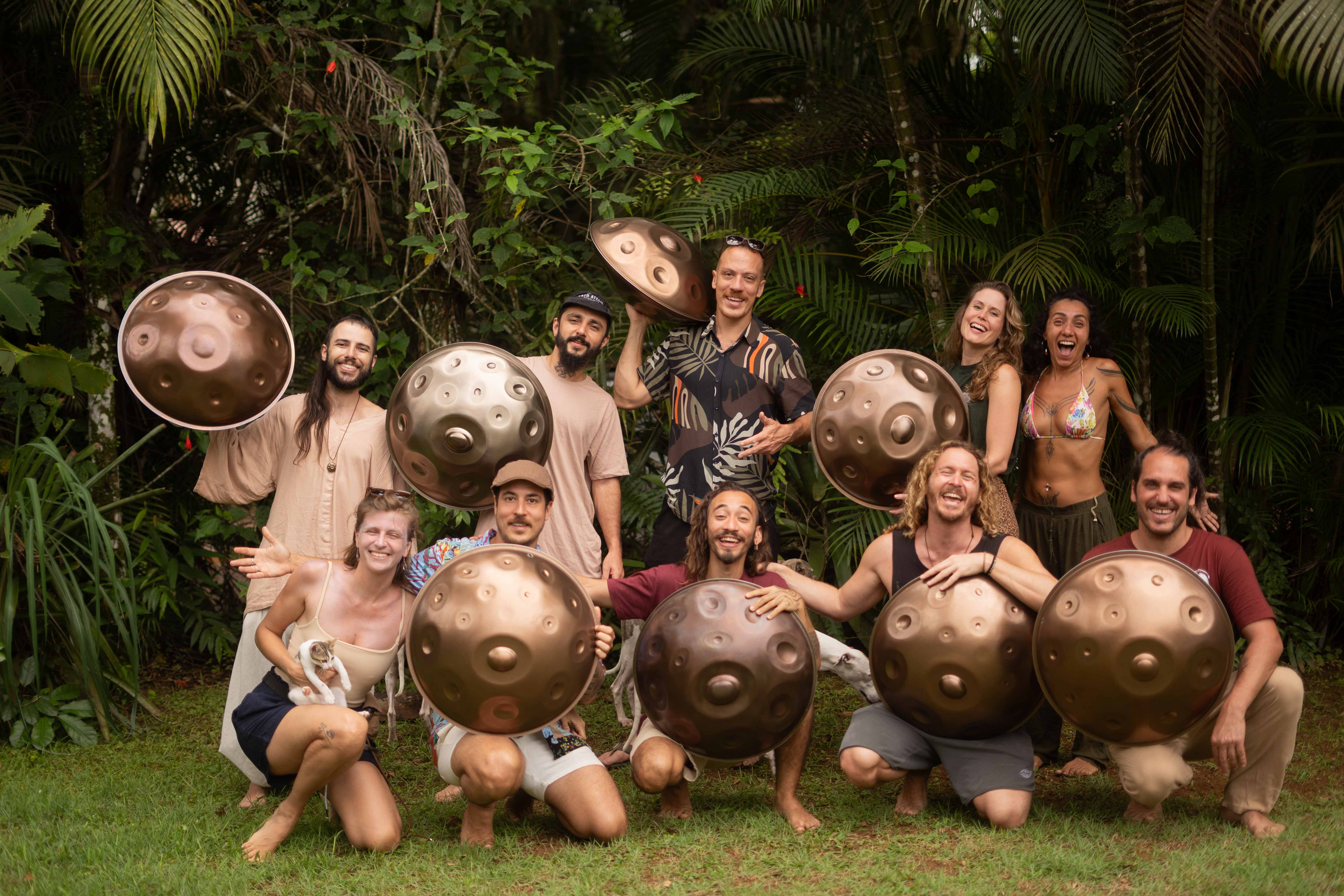
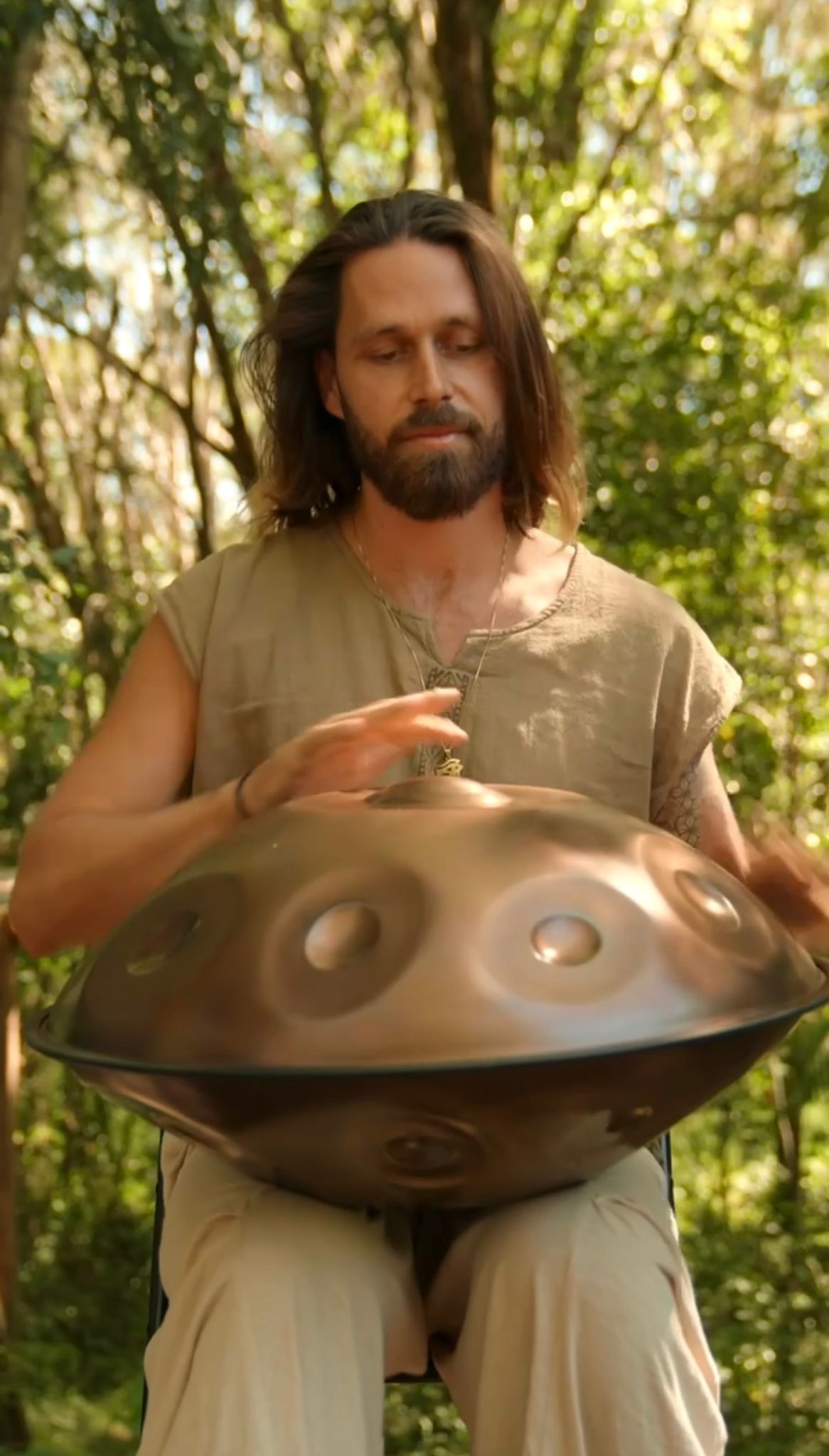
Players from
every corner.



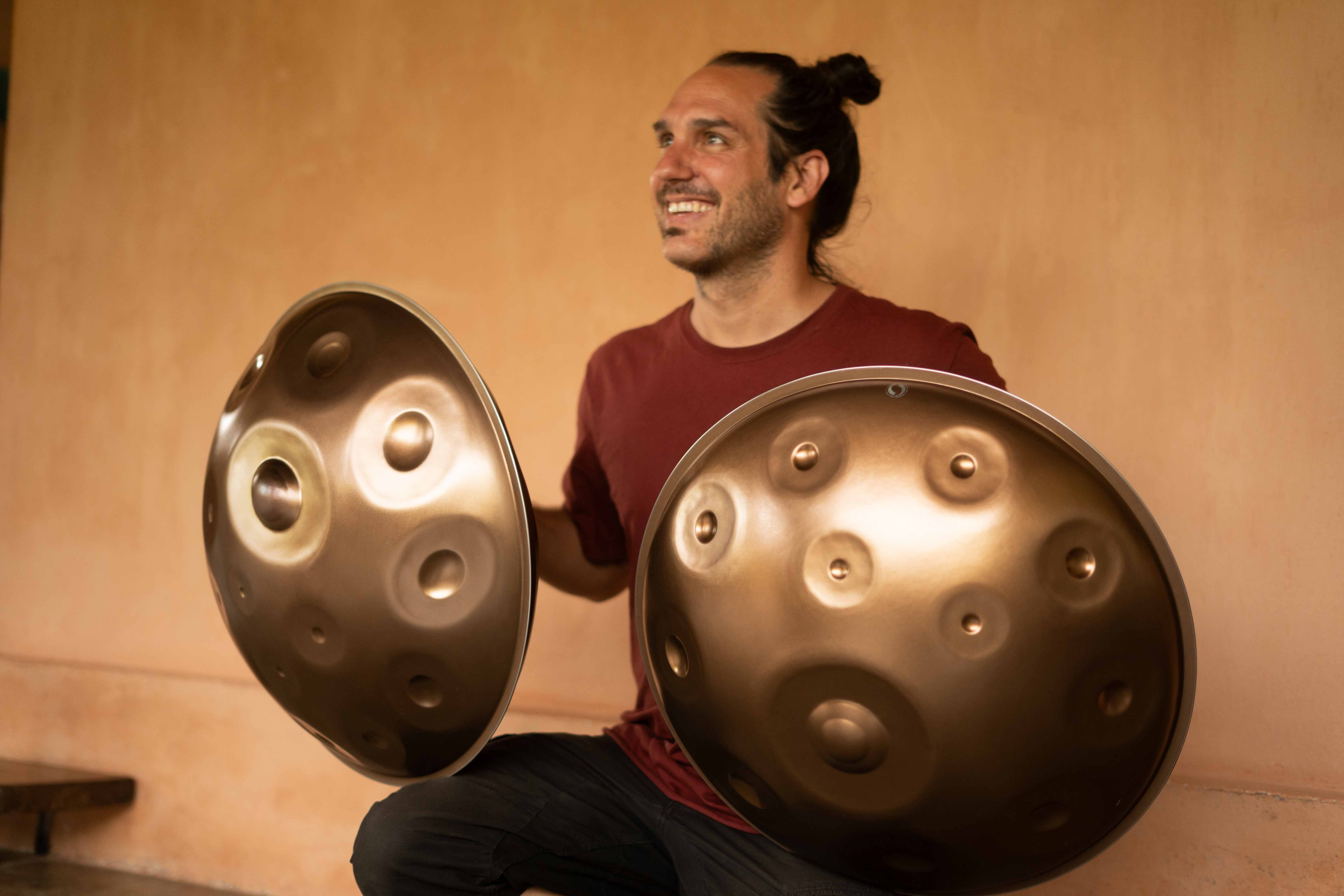

A journey
without a trace.
We ship our sound sculptures worldwide, ensuring they arrive in perfect resonance. But our responsibility extends beyond the music — it encompasses the earth that provides our resources.
We have completely eliminated plastic from our transit process. We consciously choose to absorb higher packaging costs, prioritizing long-term planetary sustainability over profit margins. Every material used to secure your Atma Pantam is clean, ecological, and purposeful.
- ◈Double-Layered Fiberglass Helmets
Immensely strong, reusable protection for the dome that entirely replaces bubble wrap or plastic foam. - ◈Rubber Rim Guard
A robust shield for the most vulnerable edge of the instrument. - ◈Craft Paper
100% natural, biodegradable void fill to eliminate internal movement. - ◈Cardboard Outer Box
A fully recyclable, thick-walled shell for the final layer of security.
Care for
the living metal.
An Atma Pantam is not merely an object — it is a resonant body. Like any living thing, it requires attention, ritual, and the right conditions to sing for a lifetime. These are the rites of care.
The After-Play Ritual
Every time you finish playing, before your instrument is put to rest, one simple act is all it takes: wipe it down. This is not optional — it is the foundation of everything that follows.
Sweat deposits salts and acids onto the surface that accelerate oxidation. Clean, dry hands are the first line of defense — especially for nitrided steel instruments.
A single metal object brushing against the surface can scratch it permanently. This is non-negotiable.
Use a soft microfiber cloth — the finest tool in your care arsenal. Wipe both the upper and lower shells, the rim, and do not neglect the port opening. Make this automatic.
Stainless steel instruments — like many Atma Pantam builds — are inherently more resistant to corrosion than nitrided or raw steel. While daily wiping is always recommended, you have more margin for the unexpected.
- —Playing with rings, bracelets or metal jewelry
- —Striking with objects, sticks, or hard implements
- —Allowing children unsupervised access
- —Playing in salt air without immediate post-play care
The Full Cleanse
When surface wiping is no longer enough — after an outdoor session, a period of high humidity, or when you notice dullness in the surface — perform a thorough clean with isopropyl or rubbing alcohol. This is the foundation for re-oiling.
Surgical spirit (50–75% ethanol or isopropyl) is gentler than pure isopropyl. Both are effective at dissolving salt deposits, dried sweat, and old oil residue without damaging the metal surface.
Dampen the cloth and work in sections — upper dome, lower shell, rim, and port. Replace the cloth if it becomes heavily soiled.
Wait until the alcohol has fully evaporated before applying any oil — a few seconds in still air is sufficient. The surface should feel completely dry to the touch.
For regular players: a thorough alcohol clean before every oiling session — typically once every 4–6 weeks. After exposure to saltwater, rain, or intense humidity: immediately. Before storing for extended periods: always.
Household cleaners, bleach, acetone, abrasive pads, or metal polishes not specifically formulated for handpans. These can strip the surface treatment, affect tuning resonance, and accelerate corrosion.
The Anointing
Oil is the protective membrane between your instrument and the world. A thin, even coat creates a barrier against moisture, fingerprints, and the slow work of oxidation. This is not optional — it is the primary act of preservation.
Because your hands are always in contact with the instrument, only natural oils should touch it. Dedicated handpan oils — such as Phoenix Oil, or the Satya Care Oil included with your instrument — have been formulated specifically for this purpose.
Less is more. A few drops on a clean microfiber cloth is enough for the entire instrument. Spread evenly across all surfaces — including the rim and inside the port. Over-oiling on nitrided instruments can mute overtones, as the porous surface absorbs excess oil.
After spreading, use a dry section of the cloth to remove any surplus. The surface should feel lightly protected — not slick or wet. A properly oiled handpan has a subtle sheen, not a visible coating.
In dry climates, months may pass without need. In humid regions, every 2–4 weeks. You can tell the oil has worn off when the surface appears dull, or when rust spots begin to appear — the latter means you've waited too long.
WD-40 is a solvent-based product — not a long-term corrosion inhibitor — and it is toxic. You do not want to coat an instrument you are in constant physical contact with. Firearm lubricants, while effective, are too thick and will significantly muffle sound.
Every Atma Pantam ships with our specially selected handpan oil and microfiber cloth. Use these as your primary care tools. When in doubt, contact us — we will advise on the specific requirements of your material and finish.
The Resting Place
Where and how you store your instrument between sessions determines much of its long-term condition. The ideal resting place is dry, airy, away from temperature extremes — and most importantly, not sealed in a damp bag.
When your instrument is home and safe, remove it from its bag and place it on a cushioned stand or resting pad. Allowing it to breathe prevents moisture from building up inside the case — a significant rust risk for nitrided instruments.
If the instrument must be kept in its bag, leave the zipper partially open. Consider placing a silica gel desiccant pack inside — particularly in humid climates or near the ocean. Refresh or replace the packs every 2–3 months.
The central note — the Ding — is the most acoustically sensitive area of the instrument. Always rest and transport with the Ding facing up. This protects the dome geometry from any accidental stress or impact.
Never leave your instrument in a car — even briefly. A parked car in summer reaches temperatures that can affect tuning stability. Basements, garages, and attics with fluctuating humidity are equally problematic for long-term storage.
Your Premium Protective Bag is designed for safe travel when combined with the inner helmets. For frequent touring or air travel, consider using the external helmet pair for an additional layer of security around the bag itself. Always ensure the instrument is secured and cannot shift inside the case, remember to use the rubber rim guard.
In humid coastal regions, increase oiling frequency and use silica gel. In very dry climates, oiling frequency can be reduced, but wiping after play is always non-negotiable. Indoors with stable temperature is always optimal.
When Rust Appears
Do not panic. Surface rust is treatable — especially when caught early. The key is speed and gentleness. What you must never do is ignore it and wait.
After each play session, when you wipe the instrument, look for any small reddish-brown spots, especially near the rim, port, and weld seam. Early rust is superficial and easily removed. Late-stage rust can affect the surface permanently and, in extreme cases, the structural integrity.
In a study of handpan owners, 82% of those who followed a monthly cleaning routine reported zero corrosion problems. The most damaging periods are: after beach or ocean exposure; after playing in rain; during summer storage in a sealed case; and during extended periods without play when oiling lapses.
Your Atma Pantam in stainless steel has significantly higher rust resistance than nitrided or raw steel instruments. While this gives you more margin for error, salt deposits and prolonged moisture can still create optical stains. These do not affect the sound, but should be addressed.
Care by Material
The most forgiving of all materials for long-term care. Inherently rust-resistant, requiring less frequent oiling — but never zero. Wipe after every session. Deep-clean with alcohol before each oiling. Oil every 4–8 weeks depending on climate. Stains from fingerprints are cosmetic only and do not affect sound.
Nitriding provides rust resistance, but the process creates a porous surface that absorbs oil readily. Use sparingly — excess oil on nitrided steel can mute overtones and dull the sound character. Wipe after every session. Oil every 2–4 weeks in humid climates; monthly in dry climates. Be especially attentive near coasts.
The distinctive warm coloration of Ember Steel will naturally develop a patina over time — this is not damage, it is character. Its organic surface texture means oiling is particularly important. Be aware that the appearance will evolve with age and care. Follow the same routine as nitrided steel, and embrace the surface transformation as part of the instrument's story.
Even the most carefully maintained handpan will experience very gradual tuning drift over years of regular play, transport, and temperature change. This is normal. Have your instrument assessed by its maker every 1–2 years if you play frequently. We offer tuning consultations for all Atma Pantam owners. Reach out.
Common
Questions.
At Satya Sound Sculptures, we do not simply manufacture instruments; we sculpt unique sonic legacies. As a highly specialized workshop focusing on exclusive, boundary-pushing models—such as our world-record 32-note builds—each Atma Pantam is a bespoke creation. Much like a fine timepiece or a custom work of art, the investment is discussed individually to ensure we meet the specific needs of customers seeking the highest attainable quality. Our focus is on delivering a tool of unparalleled resonance for those who value craftsmanship above all else.
Every journey begins with a conversation. We do not use a standard shopping cart; instead, we invite you to use our "Begin an Inquiry" form. We build a limited number of instruments each year to maintain our rigorous quality standards. Once we understand your musical vision, we will provide a personalized quote and timeline for your specific build.
We offer three primary canvases: Stainless Steel (bright, resilient, and long-sustaining—a material we pioneered in the Americas), Nitrided Steel (warm, ceramic character with traditional overtones), and Ember Steel (an organic, dynamic voice with a unique surface texture). The choice depends on your playing style and the "color" of sound you wish to project.
We ship worldwide using a completely plastic-free, conscious transit protocol. Your instrument is secured within a double-layered fiberglass helmet and rubber rim guards to ensure it arrives in perfect resonance. We absorb the higher costs of ecological packaging to protect both your sculpture and our planet.
While Atma Pantams are built for extreme stability, all handpans may eventually require a touch-up. For our direct customers, we offer a lifetime guarantee on tuning. Furthermore, the Satya Brothers travel to Europe every year to offer dedicated re-tuning services for our international family. Between visits, you can use our free Satya Strobe Tuner app to perfectly monitor your instrument's pitch.
Always play with clean, dry hands and wipe the instrument with a microfiber cloth after each session. For our stainless and ember steel models, occasional oiling protects the surface and preserves its aesthetic character. Avoid exposing the instrument to extreme heat, such as direct midday sun or a parked car, as thermal expansion can temporarily alter the tuning and internal structure.
Yes. Every Atma Pantam is a high-end sound sculpture, and protecting it is paramount. Each instrument is delivered with a premium, heavy-duty protective bag fitted to our specific dimensions, ensuring safe transport whether you are heading to a local studio or traveling internationally.
For those beginning their journey, we often recommend exploring our Minor scales—specifically the D Kurd or Amara layouts. These scales are highly intuitive, structurally balanced, and inherently harmonious, meaning there are no "wrong" notes. This allows new players to easily express emotion and build rhythmic confidence without requiring prior musical theory training.
Play & tune
from anywhere.
Two tools born from the workshop, designed by Antonio Arvind, are made freely available to any player or maker. Explore scales, tune or check your instrument, preview a scale before commissioning your instrument, or build your dream scale with no limits.
Play any Atma Pantam scale directly in your browser. Tap the tone fields, explore the full note layout, and hear how each scale sounds before requesting it in your instrument. Fully interactive — no download required.
A professional-grade strobe tuner built specifically for handpan — with three simultaneous strobe bands tracking the fundamental, octave, and compound fifth of each note. The same tuning logic we use in the workshop.
Every instrument
starts with a
conversation.
We build a small number of instruments each year. Each one is the result of a genuine dialogue between maker and player. Tell us about yourself, your music, and what you're searching for.
We respond to every inquiry personally. We believe in full transparency about our current availability and realistic timelines — no waiting list games.